Genius, and Now Airbnb: The Guide to Stop Depending on Airbnb 100%
Booking did it with Genius, Airbnb is following: a discount paid by the host to build loyalty with guests who will never be yours. Here is, in short, how to take back control with direct booking.


Welcome to this guide. I'm Simon, I build BedLink and I spend my days with property owners. Booking invented Genius. Airbnb is now following. Here is, in a few minutes, how to stop depending on them.
The mechanism, in three lines
Airbnb offers a discount to its best guests. On the host side, it arrives as an invitation: you give 10, 15 or 20% off your nights, and in exchange you climb in the results, you get a badge, and your price shows up struck through.
→ Airbnb puts in zero on the reduction. It puts in the placement. → The commission does not move. You pay for the discount, then the commission on top. → It is Genius, to the decimal. Those who accepted it at the start never got out. The discount ends up becoming the normal price.
To stop depending on it, two projects
Careful: the solution is not to leave. The platforms do one thing you cannot do alone: bring you travelers who did not know you. That is worth the 15 to 18%.
What you need is to stop depending on just one of them. Two projects, in this order:
→ 1. Be present elsewhere. The day Airbnb changes its rules, you do not lose everything. → 2. Grow your direct bookings. The only channel that truly belongs to you. It is the most important, by far.
Because for guests who have already stayed, and for those who search for you by name, paying an acquisition commission makes no sense at all. You are paying for a customer you already had.
Project 1: be present elsewhere
The easier of the two. It is filling in listings, once.
| Your profile | Channels to open |
|---|---|
| Rental, cottage, B&B, unusual stay | Airbnb + Booking |
| Villa | Airbnb + Booking + Vrbo |
| Hotel | Airbnb + Booking + Expedia + Hotels.com + Hostelworld |
→ The more channels you open, the more you fill. → And the more essential it becomes to have a single calendar, otherwise the double booking arrives.
But let's be clear: it spreads the risk, it does not remove it. You remain a tenant of your own clientele, just at several landlords instead of one.
Project 2: grow your direct bookings
This is the real subject, and the only channel that truly belongs to you. A guest who books with you direct:
→ costs you no commission, neither on this night nor on the following ones → leaves you their real email and their real number, not a platform alias → comes back the next year without going through anyone
Here you are going to say: "Simon, fine, but concretely, how do we do it?"
The real problem with direct: the deposit
As soon as you sell direct, one question comes up right away: how do you take the security deposit? And asking it reveals the funniest part. The platforms never solved it either.
| What exists | The limit | |
|---|---|---|
| Booking | Security deposit | You collect and refund it yourself: check, bank transfer, cash |
| Booking | Damage program | Capped at €250, claimable 14 days after departure |
| Airbnb | Nothing | No deposit. Resolution center after the fact, photos and quotes to provide |
→ €250 covers a window. Not a sofa, not a floor, not a party. → In practice: a check forgotten in a drawer, a bank transfer to chase, or cash asked for on arrival. The worst possible moment to talk about money.
In other words, it is not a problem of direct. It is a problem, period, that direct is the only one able to solve cleanly.
The solution: the card hold
It is the best method, by far. The amount is blocked on the guest's card, never charged.
→ Nothing leaves their account. They accept without hesitation, unlike a check or a transfer. → If something breaks, you capture. All or part of the amount, in one click. Otherwise the authorization expires on its own. → Zero chasing, zero checks, zero cash. The subject disappears from your arrivals.
One technical constraint to know: the hold lasts 7 days by default, up to 28 to 30 days depending on the card network. For a booking made six months ahead, it is placed close to the stay, not at the time of booking.
The 6 building blocks of direct
The guest compares you, live, to the Airbnb tab left open next to yours. The goal is not to do better. It is to do the same.
→ 1. Clear terms. Cancellation, deposit, damage, payment conditions. One page that settles things. → 2. Online payment, into your account. Card, 3D Secure, and the money arrives with you with no intermediary. Not a bank account number by email. → 3. A readable cancellation policy. Flexible (24 to 48 h before), moderate (5 to 7 days), strict. Shown on the booking page, not in a PDF. → 4. The card hold for the deposit. → 5. A synced calendar. Selling direct on top of the platforms multiplies the risk of double booking. A prerequisite, not a comfort. → 6. Trust signals. Reviews, photos, legal notices, a real phone number. This is what separates a site that gets visits from a site that gets bookings.
And insurance, while we are at it
I do not sell insurance, but let me say it anyway: direct, good insurance on top of the deposit costs little and closes the subject for good.
→ AirCover and Booking's protections do not follow you: they only apply to stays booked through their platform. → Direct, it is your policy that applies: a landlord policy with an explicit short-term rental extension, or a seasonal multi-risk policy. → In practice, direct guests are noticeably cleaner than platform guests. Insurance is the belt on top of the suspenders.
Recap
| What the guest checks | Airbnb / Booking | Your direct site |
|---|---|---|
| Secure card payment | ✅ Native | To be connected (Stripe, on your account) |
| Free cancellation | ✅ Displayed | To be written and displayed |
| Deposit | ❌ Absent or on you | ✅ Automatic card hold |
| Legal framework | ✅ Their terms | Your terms |
| Commission | 15 to 18% | 0% |
On four lines, the platform works for you and bills you for it. On the fifth, it takes 15 to 18%. And on the deposit, the line that costs the most when things go wrong, it does nothing.
Going further
- How much you really earn by leaving the OTAs: the line-by-line calculation, €100 collected on Booking vs €100 collected direct.
- How to collect Airbnb guests' emails, legally. Without direct booking, no customer file. Without a customer file, no second stay.
- What is a channel manager: going direct does not mean leaving the platforms, it means no longer depending on them 100%. Both calendars must stay in sync.
- Airbnb and Booking at the same time: avoiding overbooking, the number one risk when you add a direct channel on top of two platforms.
- What your commissions cost you, in numbers.
You can build it all yourself. Or let me do it.
Every piece of this guide can be set up on your own, given enough time. I'm Simon, I code BedLink and I do all of it for you: the website, Stripe on your own account, the card imprint for the deposit, the synced calendar. You configure nothing.
Client websites taking bookings right now
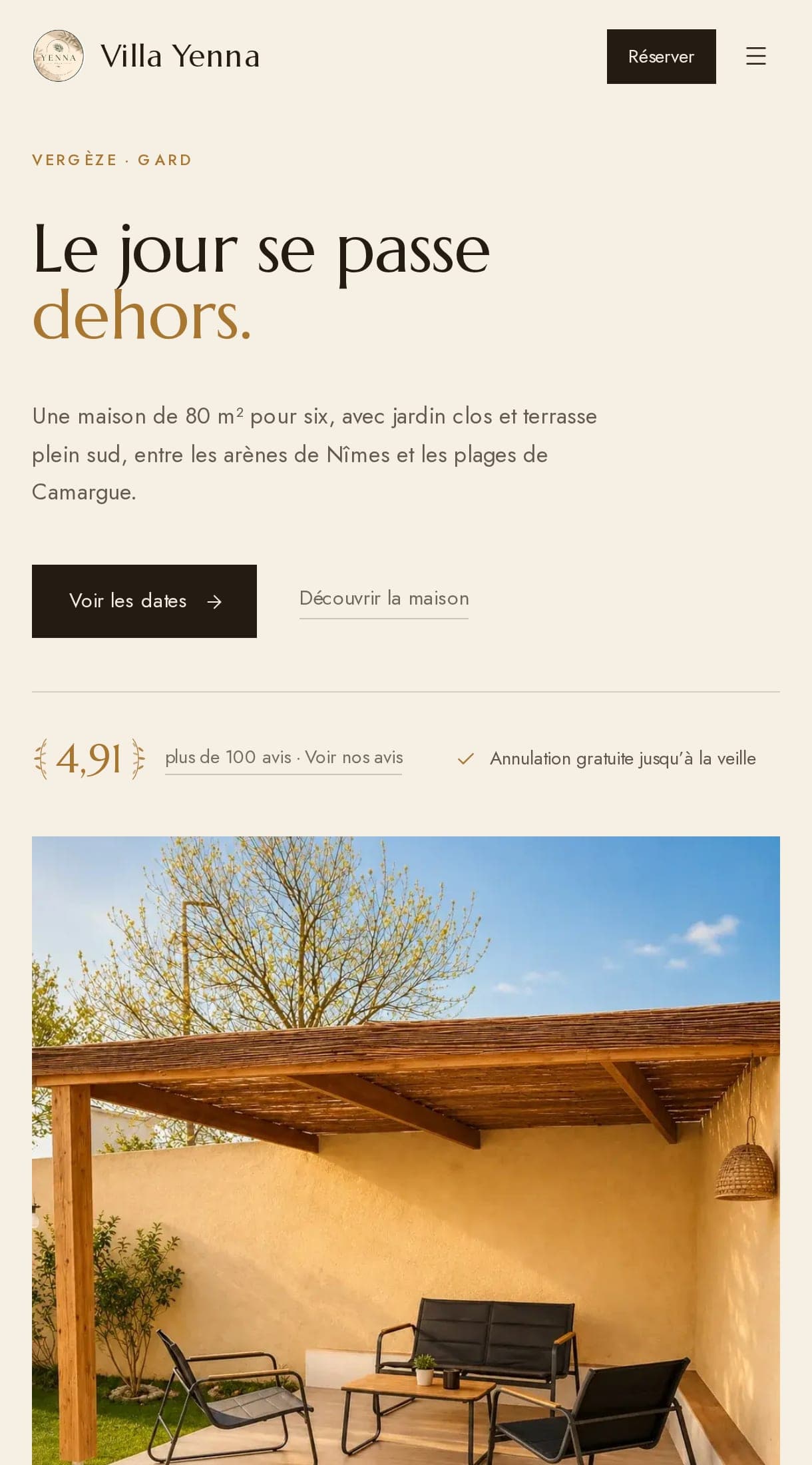
4.91/5 from over 100 reviews. Direct booking and payment, no commission.
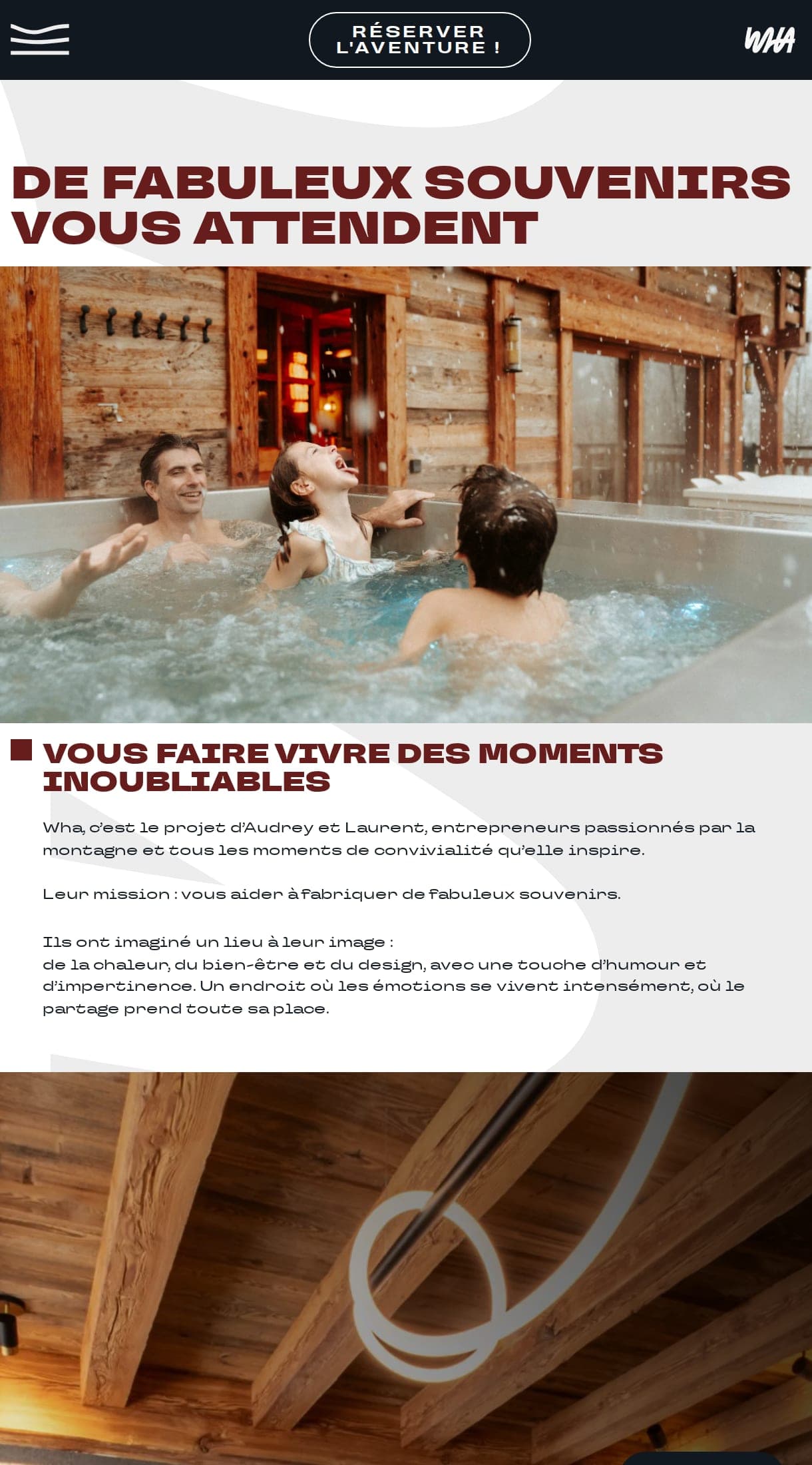
Hot tub, hammam, cinema room. Direct booking engine styled to match the chalet's branding.
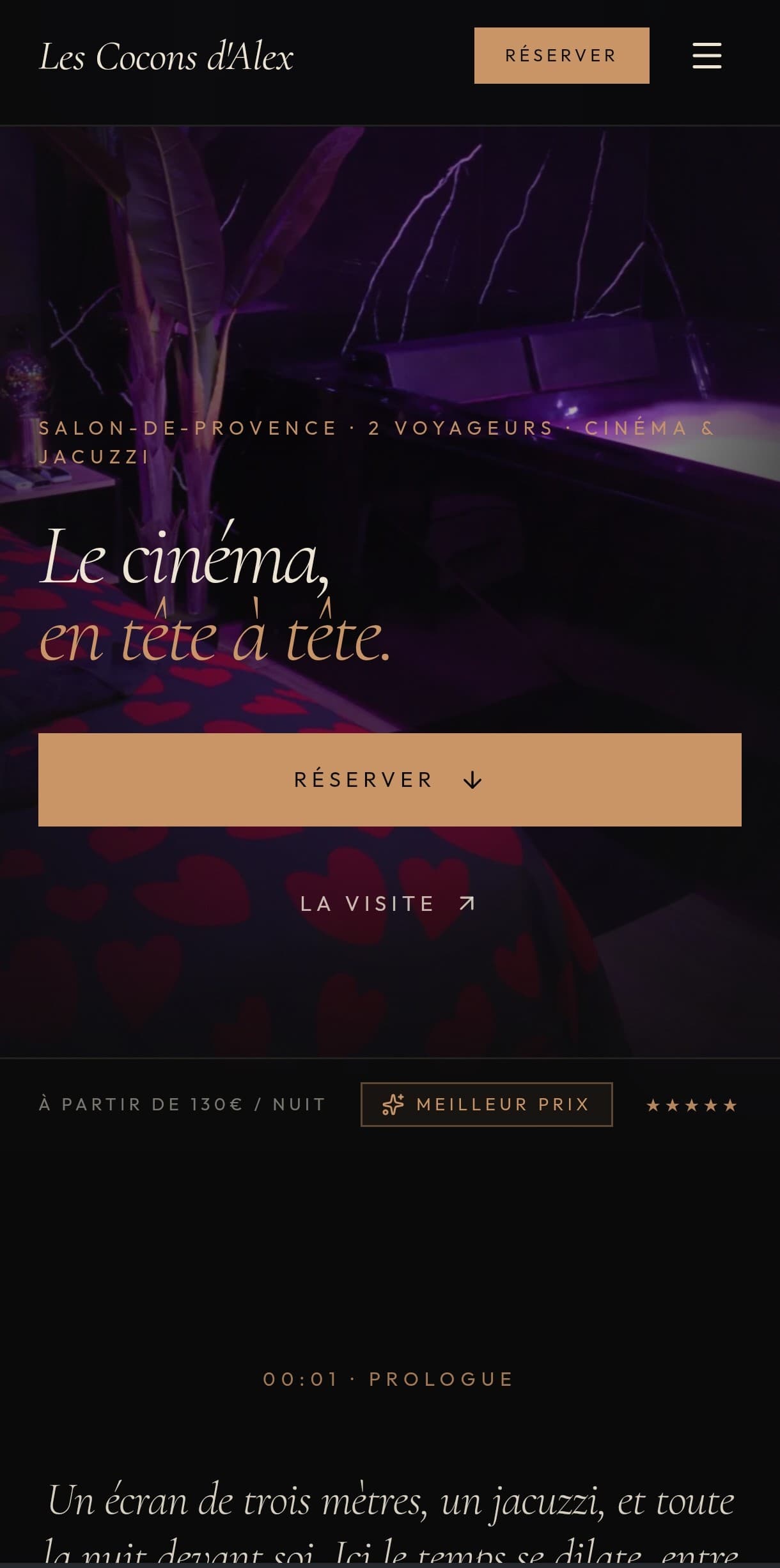
Cinema room with hot tub, extras sold online, calendar synced with the platforms.
A question about your situation?
Write to me directly. I answer myself, and I'll tell you straight whether direct booking is worth it for your property or not.
Simon, founder of BedLink